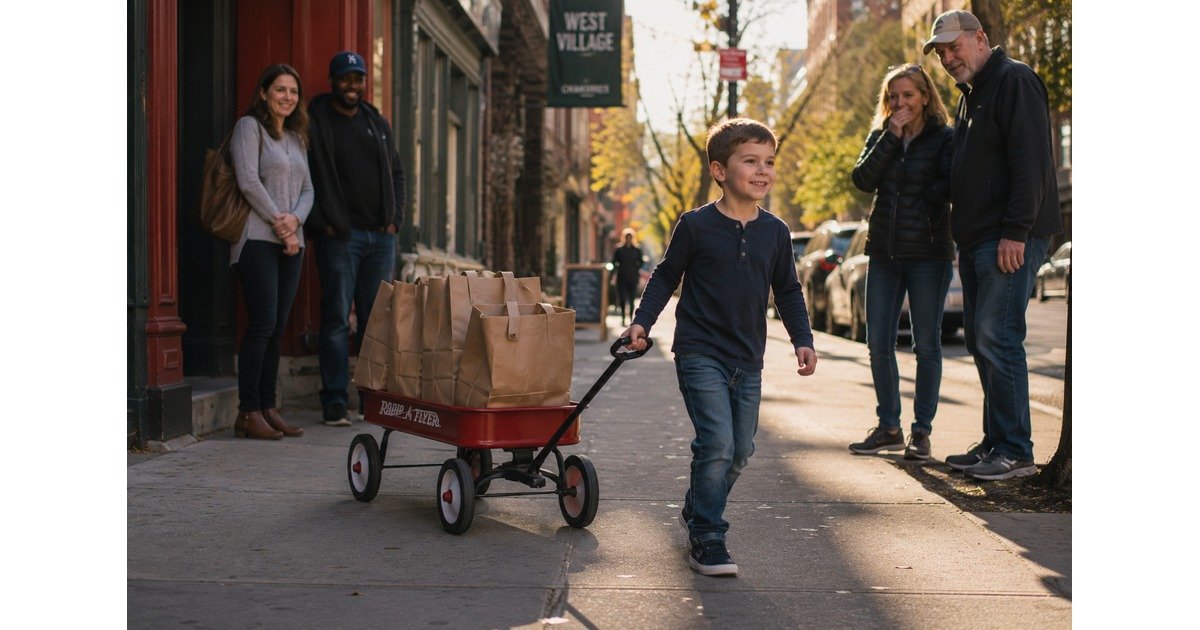
In eighteen months, Eli’s Lunch Bunch has served over 500 meals to unhoused individuals in Atlanta. Beyond sandwiches, they now distribute water bottles, hygiene kits (assembled by Eli’s classmates on Friday afternoons), and — during cold months — donated gloves and socks.
Eli knows many of the people he sees by name now. He asks about their weeks. He remembers who is vegetarian, who prefers apple juice to water, who lights up when he brings chocolate chip cookies instead of plain ones. “They’re people,” he explains, when asked why he learns this. “So I want to know them.”
His school principal, who has watched the program grow from a classroom curiosity to something that has drawn local news coverage and donations from across Georgia, struggles to find adequate words. “I’ve been in education for 22 years,” she said. “Eli Carter is the most genuinely good person I have ever encountered. And I include adults in that.”
When a local reporter asked Eli what he wants to be when he grows up, he gave it serious thought before answering. “I think probably still doing this,” he said. “Maybe bigger.”
Dana Carter, who answered a small question on a Saturday afternoon and then followed her son’s lead, has not missed a single weekend run in eighteen months. She recently got a custom T-shirt made for the team. Eli designed the logo: a sandwich with a heart in the middle, which he says represents “food plus caring.”
He is not wrong. That combination, it turns out, covers quite a lot of ground.
When Children Ask for More Than We Expect
He was eight years old, and he did not ask for a video game or a bicycle or something he had seen advertised. He asked for something that no one had prepared themselves to hear — and in the asking, he demonstrated something that adults spend years trying to recover: the ability to identify what actually matters and to say so out loud without apology or qualification.
Children have not yet learned to want what they are supposed to want. They have not internalized the scripts that teach us to ask for things that are socially appropriate, easily understood, and unlikely to make anyone uncomfortable. An eight-year-old asking for something unexpected is operating from a different kind of logic — one rooted in genuine feeling rather than calculation.
This is part of what makes his request so affecting. It is not sophisticated. It is not strategic. It is simply true. He knew what he wanted, which is harder than it sounds. Many adults do not. Many spend years trying to figure out what they actually want beneath the layers of obligation and habit. He already knew. He was eight years old, and he already knew.
If his story circulates, as stories like his tend to do, it is because it offers something people feel they need: evidence that goodness is spontaneous, that children have not yet been talked out of their best instincts, that there are still birthday wishes in the world that are not about getting but about giving. In the best sense of the word, he is a reminder of what we are capable of before we forget to be that way.
Get Heartwarming Stories in Your Inbox
Join thousands of readers getting uplifting stories every week.