Harold set off on a Monday morning in April, carrying a small American flag and a laminated card with the names of his eleven fallen comrades. He walked an average of nine miles a day, stopping when his body demanded it, starting again when his heart required it. He wore a simple sign on his back: “Walking for the Forgotten. Korea 1951–1953.”
Word spread quickly. By day three, strangers were lining the road to cheer him on. Veterans drove hours to walk a mile beside him. A high school cross-country team from a nearby town ran the last two miles of day five in formation around him, silent and respectful, their coach weeping openly. A woman whose father had served in Korea brought Harold a photograph of her dad in uniform and asked if she could pin it to his shirt. He said yes. More photos followed. By the final day, he was carrying eleven photos over his heart — one for each man he’d lost.
On day eleven, Harold Simmons walked the final mile into Austin to a crowd of over 3,000 people. Veterans stood in salute. Children held handmade signs. A local high school band played the national anthem. When Harold reached the memorial and placed his laminated card — now soft with eleven days of handling — at the base of the monument, the crowd went completely silent.
Harold stood there for a long time. Then he straightened up, squared his shoulders the way soldiers do, and said clearly into the microphone that had been set up nearby: “I told you I wouldn’t forget you. I hope I did you proud.”
The applause that followed lasted four minutes. People counted.
A video of Harold’s arrival has been viewed over 28 million times across social media. He has received letters from all 50 states and from seven other countries. The families of two of his fallen comrades reached out after seeing the video — one of them, a granddaughter in Ohio, had never known the full story of her grandfather’s service until she saw Harold carrying his photo.
Harold Simmons is home now, back in his recliner in Beaumont, though the news stays off a little more these days. He’s been spending his mornings writing back to letters — every single one. When asked what he’ll do next, he didn’t hesitate.
“Same thing I always do,” he said. “Remember.”
What Ninety-One Years Old Knows About Stubbornness
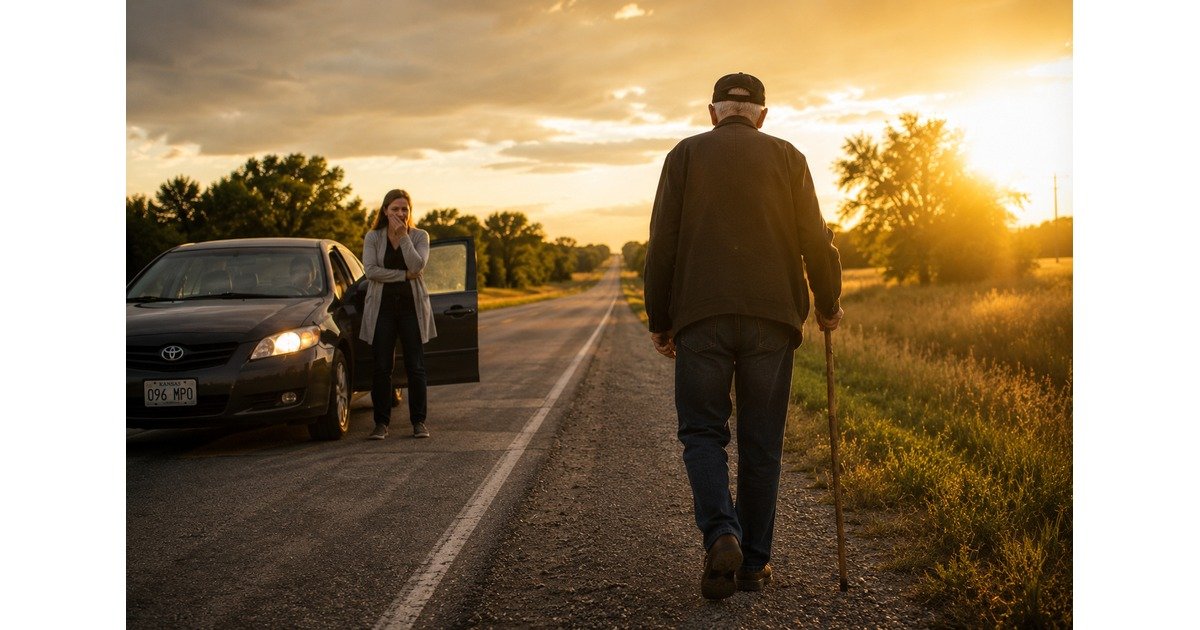
He was ninety-one. He told his family he was going for a walk. And something in how that sentence sits — the simplicity of it, the normalcy of it, the particular character it takes on at ninety-one — carries more weight than it would at any other age. A walk, at ninety-one, is not casual. It is a statement. It is the insistence, still, on moving through the world under your own power and on your own terms.
The very old sometimes talk about how age makes small freedoms visible in ways they were not before. When standing up without help becomes something you notice, the simple act of standing carries a meaning it never did before. The walk around the block that passed unregistered at forty becomes, at ninety-one, something you plan for and execute with full awareness of what it represents: continued autonomy, continued presence, continued capacity to decide for yourself what this particular Tuesday is going to look like.
His family’s response to his announcement — whether they worried, whether they tried to accompany him, whether they let him go on his own — is the less important part of the story. The important part is the man himself: ninety-one years old and still going for a walk. Still claiming the right to move. Still insisting on participation in the ordinary business of being alive.
At ninety-one, that insistence is not stubbornness in any negative sense. It is the accumulated understanding of a long life that the alternative — waiting, diminishing, conceding ground without reason — is worse than the effort required. He knows exactly what it costs to go for a walk. He has decided, every time, that it is worth it.
Get Heartwarming Stories in Your Inbox
Join thousands of readers getting uplifting stories every week.