My father died on a Thursday morning in February, alone except for me, in a hospital room that smelled like antiseptic and the hand lotion I brought every week because he said it reminded him of my mother.
Within forty-eight hours, my three siblings were calling about the will.
I want to tell you who these people are, so you understand what I mean when I say “disappeared.”
My brother David, fifty-one, lives forty minutes away. He visited my father twice in the last three years. Both times were Christmas, both times lasted under four hours, and both times he spent at least one of those hours on his phone in the parking lot.
My sister Karen, forty-eight, lives in the same city as my father. She found reasons — work, her kids’ schedules, exhaustion, a persistent sense that Dad was “doing fine” — to visit perhaps six times in four years. She called on birthdays. Sometimes.
My youngest brother Patrick, forty-four, moved to another state eight years ago and visited exactly three times: once when Dad was first diagnosed, once two years later when it seemed like he might not make it through a hospital stay, and once for the funeral. He called occasionally. He always meant to visit more.
And me. Catherine. Forty-six years old. The one who lived twenty minutes away and drove those twenty minutes every single week for eight years.
I want to be precise about what those eight years looked like, because it is not abstract.
In eight years, I coordinated fourteen medical specialists across three hospital systems. I managed his medications — which at peak numbered eleven separate prescriptions requiring careful timing and monitoring for interactions. I handled his finances after his cognitive decline made that dangerous for him to do alone. I negotiated with his insurance company seventeen times that I can specifically remember and certainly more that I’ve lost track of. I arranged home care aides and fired two of them when they weren’t meeting his needs and hired replacements. I sat with him through chemotherapy. I drove him to physical therapy forty-one times. I took two weeks of personal leave when he broke his hip. I spent two separate holiday seasons largely at his house rather than my own.
I am not saying this for sympathy. I am saying it because I need you to understand the weight of what the will reflected.
My father, being the man he was, had thought carefully about this. He had spoken with his attorney. He had made his wishes clear in a document that was legal, witnessed, and unambiguous.
He left seventy percent of his estate to me. The remaining thirty percent was divided equally among David, Karen, and Patrick — ten percent each.
The estate was not enormous by any measure. A paid-off house, a modest retirement account, some savings. In total, roughly $340,000. My share came to approximately $238,000. Each of theirs came to approximately $34,000.
The calls started two days after he died.
David called first. He was “shocked” and “hurt” and felt Dad had not been “in the right state of mind.” He used the phrase “undue influence” twice, which told me he had already spoken to someone with legal knowledge, or at least Googled enough to know the vocabulary.
Karen called the same evening. She cried. She said she understood I had done a lot but that Dad loved all of them equally and surely he would have wanted the money split equally too. She said dividing it unequally would permanently damage the family.
Patrick texted. He said he wasn’t trying to make this harder but that he just thought Dad would want everyone taken care of.
I want to tell you what I felt in those forty-eight hours, because it was not what I expected.
I expected anger. I had some of that. But mostly what I felt was a kind of exhausted clarity — the feeling of something that had been slightly blurred for years finally coming into focus.
These were people who had known, on some level, what was happening. They had known I was there every week. They had known about the hospital stays and the aides and the medications because I had kept them informed, faithfully, through a group text that I updated after every significant development. David had responded to those texts with “thanks for keeping us posted” so many times I stopped counting.
They had known. They had chosen their distance. And now that the distance had a dollar amount attached to it, they wanted to renegotiate.
I did not call any of them back that first week.
I met with my father’s attorney, who confirmed that the will was unambiguous and that my father had been fully competent at the time of signing — something that would be easy to establish given his medical records and the attorney’s own notes from their meetings.
I spoke with my husband. I spoke with a therapist I had been seeing, intermittently, since my father’s first hospitalization. I thought about it for two weeks.
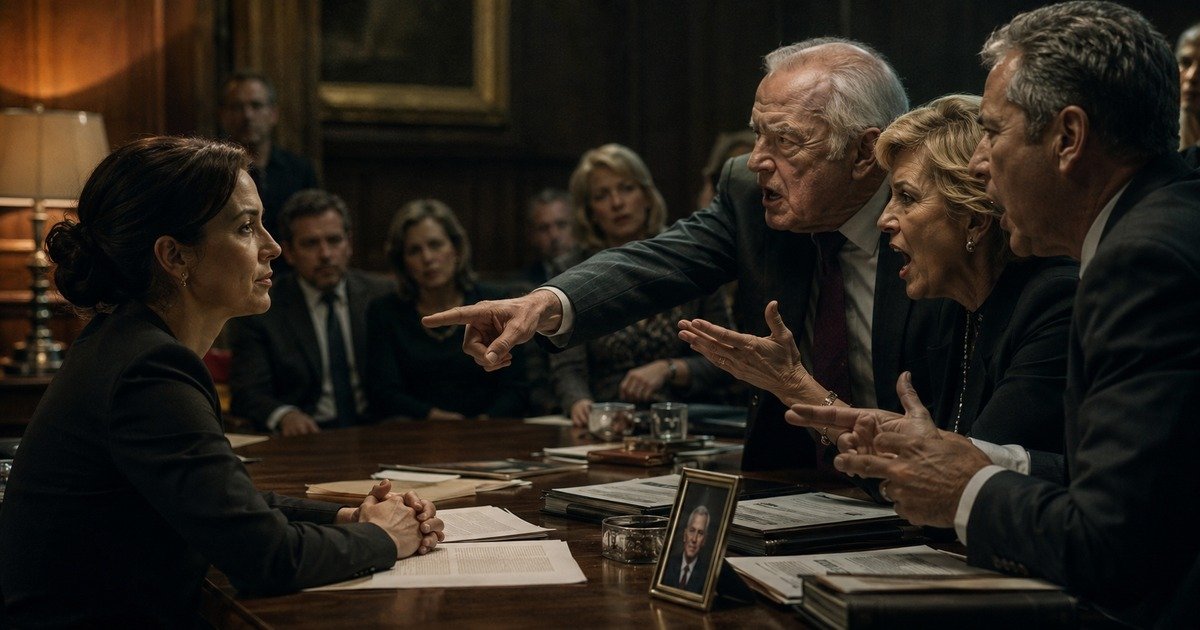
Then I called a family meeting.
We met at my house, the four of us, on a Saturday morning. I served coffee. I let them speak first.
David presented what he clearly felt was a logical argument about fairness and Dad’s intentions. Karen cried and talked about what Mom would have wanted. Patrick was quieter than the other two and said mostly that he just wanted everyone to be okay.
I listened to all of it.
Then I spoke.
I told them I had spent eight years doing what they had not done. I did not say this with anger — I had processed most of the anger by then. I said it as a fact, the way you state a fact about weather or geography.
I told them I respected that they had their own lives and their own reasons. I was not there to relitigate those reasons.
I told them that Dad had made his decision freely, with full information, and with the kind of deliberateness that characterized everything he did in his life. He had watched all of us for eight years. He had made his accounting. I was not going to override it on their behalf.
David said I was being selfish.
I said I disagreed.
Karen said she hoped I understood what this would do to the family.
I said I hoped the family could survive a decision made by our father.
Patrick looked at the table for most of this.
As they were leaving, he stopped in the doorway and said he was sorry he hadn’t been there more. He said he had told himself Dad was okay because it was easier than knowing he wasn’t. He said he wasn’t sure that excused anything.
I told him it didn’t. But I told him I appreciated him saying it.
That was four months ago.
David and Karen have not spoken to me since. I have been told, through secondary channels, that David has consulted an attorney about contesting the will. My father’s attorney tells me he has little grounds but that these things can drag on regardless.
Patrick texts occasionally. Nothing heavy — a meme sometimes, a check-in. It is something, and I hold it without putting too much weight on it.
I have the house now. I have been in it twice. The second time, I sat in my father’s chair in the living room for a long time, in the quiet, and thought about the Thursdays. The way February light comes through that window in the morning. The hand lotion. The forty-one physical therapy drives. The seventeen insurance calls.
All the things that don’t show up in a will but that a will, sometimes, reflects.
I do not think my father left me more money because he loved me more. I think he left me more money because he understood something about fairness that went beyond equal division. He understood that equal outcomes and equal effort are not the same thing. He understood, perhaps, what eight years of showing up actually costs.
He left me what he left me because he was paying attention.
That is the only inheritance that mattered.
The rest is just the accounting.
Am I the asshole for refusing to split the inheritance equally — or was my father right that equal money for unequal sacrifice is not actually fairness?
Share this if you believe that showing up for someone, day after day, year after year, deserves to be recognized — even when it costs something.
Get Heartwarming Stories in Your Inbox
Join thousands of readers getting uplifting stories every week.