The crash was loud enough to stop every conversation in the diner.
Marcus had been working the back station for four hours straight on a Thursday night when the tray slipped. He still does not know exactly how it happened — the floor was wet near the pass-through, his grip was tired, and then everything was airborne at once. Two plates of chicken fried steak. A glass of sweet tea. A bowl of soup. All of it landing directly on the man in the gray suit sitting at table seven.
Marcus was nineteen years old. He had been washing dishes at the Crown Point Diner since he was sixteen, starting the summer before his junior year when his grandmother Delphine told him that idle hands were not welcome in her family. He had never dropped a full tray before. He stood in the wreckage of table seven, soaked in sweet tea and humiliation, and the first thing he thought was: Grandma is going to hear about this.
The man in the gray suit stood up slowly.
His name was Richard Calloway. He was forty-five, a regional sales director passing through on his way to a meeting, and he was not the kind of man who absorbed inconvenience quietly. He had already complained twice that evening — once about the wait time and once about the temperature of his coffee. The spilled dinner was not something he was prepared to absorb quietly either.
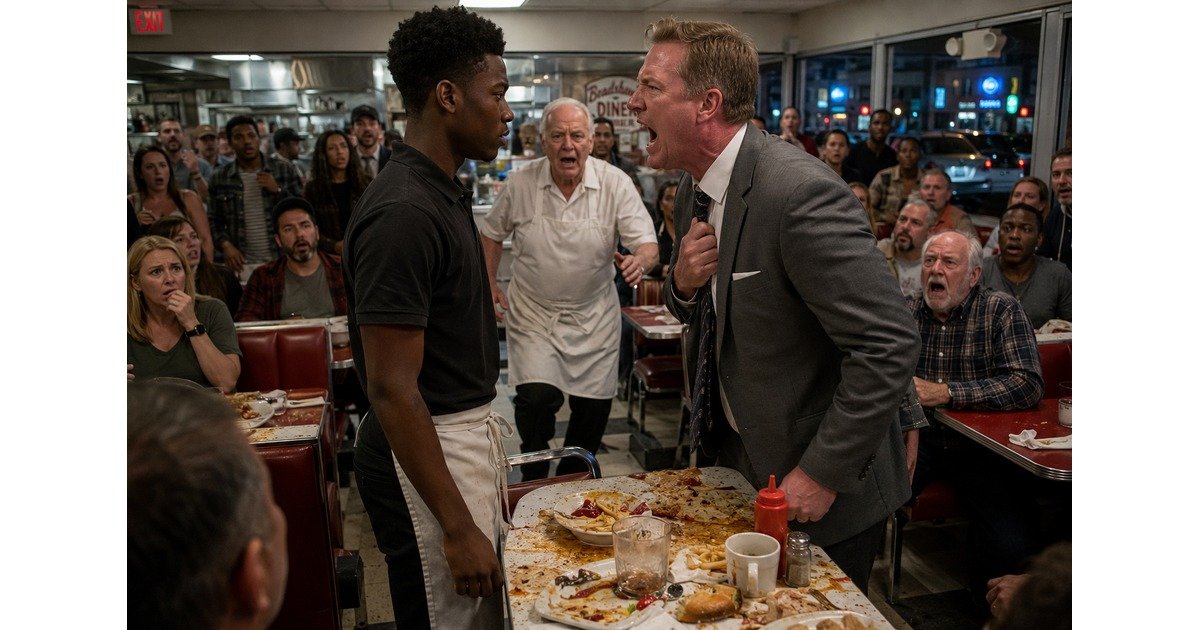
He grabbed Marcus by the front of his shirt.
The diner went completely still. Not the polite stillness of people pretending not to watch. The real kind — forks set down, conversations abandoned mid-sentence, children pulling on their parents’ sleeves. Every person in the Crown Point Diner was watching Richard Calloway scream into Marcus’s face, close enough that Marcus could feel the heat of his breath.
Marcus apologized. He apologized four times in the span of about thirty seconds, each apology quieter than the last, his voice doing the thing voices do when they are trying very hard not to break entirely. He kept his hands at his sides. He did not pull back. He stood inside the grip of a man twice his age and kept saying he was sorry while the diner held its breath.
The kitchen door swung open.
Earl Hutchins was sixty-seven years old and had run the Crown Point Diner for thirty-one years. He was not a tall man, and he was not imposing in the conventional sense. But he had worked a grill for three decades and he walked with the particular authority of someone who has never once been unsure of where he belonged. He crossed the dining room in about six steps and he was already talking before he cleared the pass.
Let go of that boy right now.
Calloway turned, still gripping Marcus by the shirt, and told Earl to mind his business. Said his employee had just ruined a six-hundred-dollar suit. Said if he had any interest in keeping his restaurant intact, he would start by teaching his staff not to dump food on paying customers.
Earl looked at him for a long moment. The dining room was completely silent.
Then he said the six words.
He owns this place. Let go.
Calloway loosened his grip slightly — more confusion than compliance. He looked at Earl. He looked at Marcus. He looked at the staff frozen near the kitchen door. Nobody moved.
What?
Earl pointed at Marcus and said it plainly, the way you say something you’ve known for a while and have no interest in dramatizing.
That young man is the legal owner of this establishment. He has been since this morning. Now take your hands off him before I call someone who will explain to you exactly what you just did.
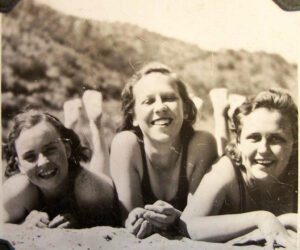
Delphine Hutchins had run the Crown Point Diner alongside her brother Earl for twenty-two years before her health began to decline. She had watched her grandson Marcus grow from a small boy who did homework at the counter into a young man who showed up without being asked, who learned every station in the kitchen, who never complained about the hours or the dish pit or the way his hands cracked in winter from being wet all day.
She made her decision quietly, the way she made most decisions. She called her attorney in February. She signed the transfer papers in April. She arranged through Earl for the deed to be finalized on a Thursday in May — the same Thursday Marcus was scheduled to close.
She did not tell him.
She wanted him to earn it first. She wanted him to spend one more shift washing dishes in a building that was already legally his and not know it yet. She believed there was something important in that — in doing the work without needing to know the reward was coming.
She passed away six weeks later, on a quiet Tuesday morning, with Earl sitting beside her.
Richard Calloway released Marcus’s shirt.
He stood in the middle of the diner with food on his jacket and the full attention of every person in the room. Witnesses disagree on exactly what he said next. Some say he apologized. Some say he simply walked out. The accounts vary on the small details.
What no one disagrees on is what Marcus did.
He stood in the middle of the dining room for a moment. Then he bent down and picked up the fallen tray. He collected the broken dishes one by one, carried them back to the kitchen, returned with a mop, and cleaned up the mess himself.
Then he finished his shift.
He locked up the Crown Point Diner that night the same way he had locked it up a hundred times before — checking the back burners, turning off the lights over the counter, making sure the door was secure. He did it all without knowing, until Earl told him in the parking lot afterward, that his grandmother had signed the building into his name that very morning.
Earl said Marcus stood next to his car for a long time without saying anything.
Then he said: She knew I’d drop that tray, didn’t she.
Earl laughed for the first time in weeks.
No, he said. She just knew you’d clean it up.
Marcus runs the Crown Point Diner now. He kept every staff member his grandmother ever hired. He has not changed a single item on the menu. On the wall near the register, in a frame his grandmother picked out herself years before she got sick, there is a handwritten note that reads: Do the work. The rest follows.
He says he thinks about that Thursday night more than any other night of his life.
Not because of the man who grabbed him. Not because of the crash, or the humiliation, or the silence that followed it.
Because of what Earl said afterward in the parking lot. Because of what his grandmother knew about him before he knew it about himself.
She did not leave him a diner. She left him proof.
Get Heartwarming Stories in Your Inbox
Join thousands of readers getting uplifting stories every week.