My cardiologist referred me to a cardiac rehabilitation program. I went three mornings a week to a community center gym where a nurse named Barbara attached electrodes to my chest and monitored my heart rate while I walked on a treadmill.
Barbara was fifty-eight years old and had been doing this for twenty years and she had the particular competence of someone who is very good at a thing and knows it without needing to say so. She did not treat me like someone fragile. She treated me like someone capable of becoming stronger, which turned out to be exactly what I needed.
There were six other people in the program during my sessions. We were all between fifty-eight and seventy-seven. We had all had cardiac events of various kinds. We walked on treadmills and pedaled stationary bikes and did gentle resistance work and talked to each other with the openness of people who have recently been reminded that time is not guaranteed.
A man named Harold told me about his grandchildren. A woman named Evelyn told me about her garden. A retired police officer named Frank told very long jokes with endings that were never quite as good as the setup promised, and we laughed anyway because the laughing was good for us and because Frank needed us to.
I graduated from the program after twelve weeks. Barbara gave me a sheet with my progress data – my resting heart rate, my exercise tolerance, my blood pressure trends – and the numbers were good and I was proud of them in a way I had not expected to be proud of anything again.
She also gave me a handshake and said: “You did the work. The numbers are yours.”
I am sixty-seven now. I walk four miles every morning. I take my medications. I see my cardiologist every six months and he tells me my numbers are good and I tell him I know and we are both pleased about this in our different ways.
The fear has not gone entirely. I am not sure it will. But it has settled into a smaller space, and around it there is something that has grown larger than I expected: gratitude. Not the polite, reflexive kind. The real kind. The kind that comes from understanding, genuinely and physically, that the morning you are in is one that could have gone differently.
Harold still texts me photos of his grandchildren occasionally. Evelyn’s garden had a remarkable year last summer, judging by the photographs she sends. Frank’s jokes have not improved.
I am grateful for all of it. I am grateful for Barbara and her electrodes and her matter-of-fact belief that I was capable of more than I thought I was.
I am grateful for the two AM phone call Warren made without hesitating. I try to tell him this regularly, in case it is something he needs to hear.
It is something he needs to hear.
Share this with someone who is in their own recovery and needs to know the other side of it is possible. It is. The work is worth it.
You might also enjoy: More Inspiring People Stories on KindlyTold
What Surviving Teaches You That Living Could Not
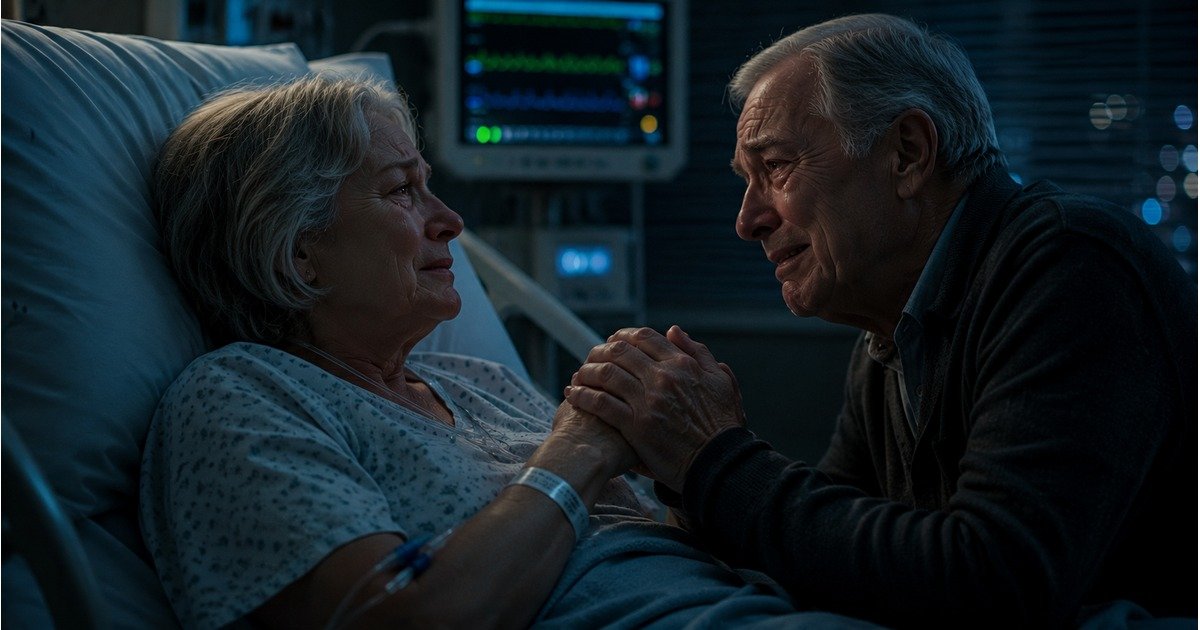
She was sixty-five years old and had been healthy her entire life. And then at two in the morning on a Thursday in October, everything changed. The chest pain. The 911 call. The cath lab before dawn. Survivors of cardiac events often describe the experience in terms of a before and an after. The before is characterized by the particular confidence of someone who has never been seriously ill — the assumption, never fully articulated, that the body is reliable, that it will keep doing what it has always done.
What changes after a heart attack — for those who are fortunate enough to have an after — is often not what people expect. The big realizations tend to come later, quietly, in ordinary moments. In the way a morning cup of coffee tastes different when you are aware that you could have missed it. In the way a phone call from a child becomes something to linger in rather than rush through.
There is a particular kind of gratitude that does not announce itself loudly but settles into everyday life like a new layer of attention. Food tastes different. Sleep feels more deliberate. The ordinary morning — the light through a window, the sound of a house waking up — carries a weight it did not before. Not a heavy weight. A meaningful one.
Stories like hers are worth reading carefully, because they carry information that statistics cannot convey: what it actually feels like to face the fragility of a life, to be caught off guard by your own body, and to come back. If her experience reaches someone who has been putting off a doctor’s appointment, ignoring symptoms, or simply not paying attention — that alone makes it worth telling.
Get Heartwarming Stories in Your Inbox
Join thousands of readers getting uplifting stories every week.