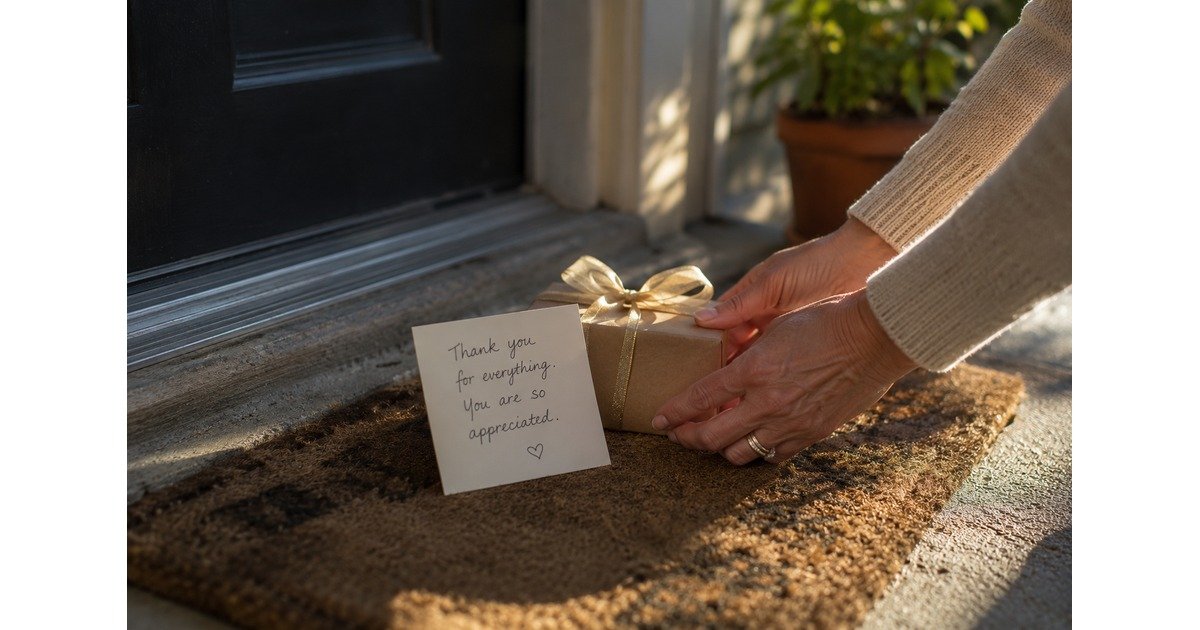
She paid what she could through the treatment. Some months it was half. Some months it was nothing. She left a handwritten note every single time explaining the amount and thanking me and promising to settle the balance when she was able.
I kept every note. I have them in a folder in my desk.
Dorothy went into remission in November of 2021. She called me from the hospital to tell me, and when I answered the phone she was crying, and when I understood why she was crying I sat down in my kitchen and did not say anything for a while because there was a tightness in my chest that I needed a moment to manage.
She paid back every dollar she owed over the following eighteen months. I told her repeatedly that she did not have to. She told me repeatedly that she did.
She moved out last spring, closer to her daughter in another state. On the day she left she handed me an envelope and asked me not to open it until she had driven away. I watched her car turn the corner and then I opened it.
Inside was a check for two thousand dollars and a letter that I will not reproduce in full because it is private and belongs to me. But I will tell you the last line, which she had underlined twice:
“You treated me like a person during the months when it would have been easy and legal and even understandable to treat me like a liability. I will spend the rest of my life trying to do the same for someone else.”
I have been a landlord for thirty-one years. I have had difficult tenants and difficult situations and moments where the work felt purely transactional and exhausting. But I have also had Dorothy.
I think about her when I am tempted to be harder than I need to be. I think about the phone call and the notes in the folder and the way she said “I understand completely if you need to make other arrangements” – so prepared to be treated as disposable, so surprised when she was not.
Nobody should be that surprised by basic human decency. But until the world catches up, I suppose the least the rest of us can do is keep providing it anyway.
Share this if it restored a little of your faith today. The world needs more Dorothys – and more people willing to show up for them.
On Kindness Between People Who Need Each Other
She called to tell her landlord she had cancer. That is an act requiring more courage than most people recognize. To call someone in a position of power over your housing stability and volunteer information that could disadvantage you — it speaks to a particular quality of character. She was not required to tell. She chose to, because the relationship she understood herself to be in was one where honesty was possible.
The landlord-tenant relationship is often discussed in transactional terms: rent paid, maintenance handled, lease signed. But it is also, at its core, a relationship between human beings who share space in different ways — one who lives in a place, one who owns it — and who are therefore inevitably, in small ways, part of each other’s lives. A cancer diagnosis does not stay neatly within transactional borders.
What makes this story worth telling is the moment of decision on both sides. Her decision to call and be honest. Whatever decision followed on the other end of that call. Two people, navigating a situation that no lease agreement prepared them for, trying to treat each other like human beings rather than parties to a contract.
Illness exposes the quality of our relationships in ways that ordinary life does not. It strips away comfortable distance and forces a kind of directness. What kind of person are you when the stakes are real? Stories like this one suggest that the answer, more often than we might expect, is a better one than we feared.
Get Heartwarming Stories in Your Inbox
Join thousands of readers getting uplifting stories every week.