When Tom Larson adopted Oliver from the county shelter three years ago, the tabby cat was eight months old, underweight, and so skittish that he spent his first two weeks behind the washing machine. Tom — a 58-year-old electrician from Boise, Idaho — left food near the machine, spoke quietly when he was in the laundry room, and otherwise gave the cat as much space as he needed. “I wasn’t going to rush him,” Tom said. “He’d had a rough start. We’d get there.”
They got there. Slowly, then all at once, Oliver uncurled himself from his fear and became, as Tom’s sister describes him, “the most devoted cat I’ve ever seen in my life.” He followed Tom from room to room. He slept on Tom’s feet. When Tom watched TV, Oliver sat on his chest. When Tom left for work, Oliver waited by the door. When Tom came home, Oliver was there before his key hit the lock.
Fourteen months ago, Tom suffered a stroke. It happened on a Sunday morning, in his kitchen, while he was making coffee. He was alone in the house. He collapsed against the counter and slid to the floor — conscious but unable to move his left side, unable to speak clearly, his phone on the counter six feet above him.
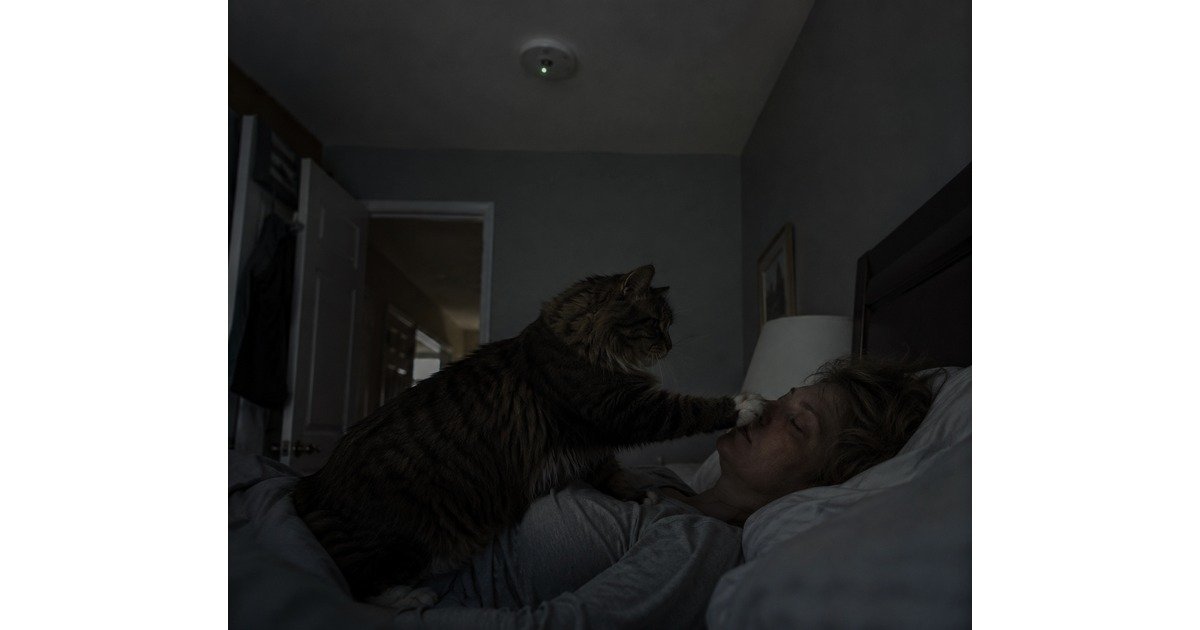
Oliver had been asleep on the couch. Within moments of the crash, he was in the kitchen. He stood over Tom, meowing — not his usual quiet greeting, but something loud and insistent, a sound Tom had never heard him make before. Then he did something that still makes Tom go quiet when he tells the story.
Oliver began pawing at Tom’s phone, which had fallen from his pocket during the collapse and landed nearby. He pawed it until it slid toward Tom’s reachable hand. Tom managed to unlock it and call 911. Paramedics arrived within nine minutes.
The doctors later told Tom that nine minutes was the difference. Any longer and the outcome would have been significantly worse.
Get Heartwarming Stories in Your Inbox
Join thousands of readers getting uplifting stories every week.