Harold Gibbs told the volunteer at the front desk that he was just browsing.
He said this in the same careful tone people use when they don’t want to commit to something they already know they need. He was seventy-one years old, recently retired from thirty-four years of teaching high school history in Dayton, Ohio, and his wife of forty-six years, Eleanor, had passed eleven weeks earlier after a brief illness that moved faster than any of them had expected.
The house, Harold told his daughter on the phone most evenings, was very quiet.
She was the one who suggested the shelter. He resisted for six weeks. He was not a dog person, he said. He and Eleanor had talked about getting a dog for years and had never quite gotten around to it.
“That’s exactly why,” his daughter said.
The Dayton Area Humane Society smelled like disinfectant and animal warmth. The volunteer who greeted Harold was nineteen years old and had the particular gentleness that some young people carry naturally. She walked him slowly through the kennels and let him look without commentary.
He walked past barking dogs and shy dogs and energetic dogs who threw themselves at their kennel doors. He stopped at the far end of the row.
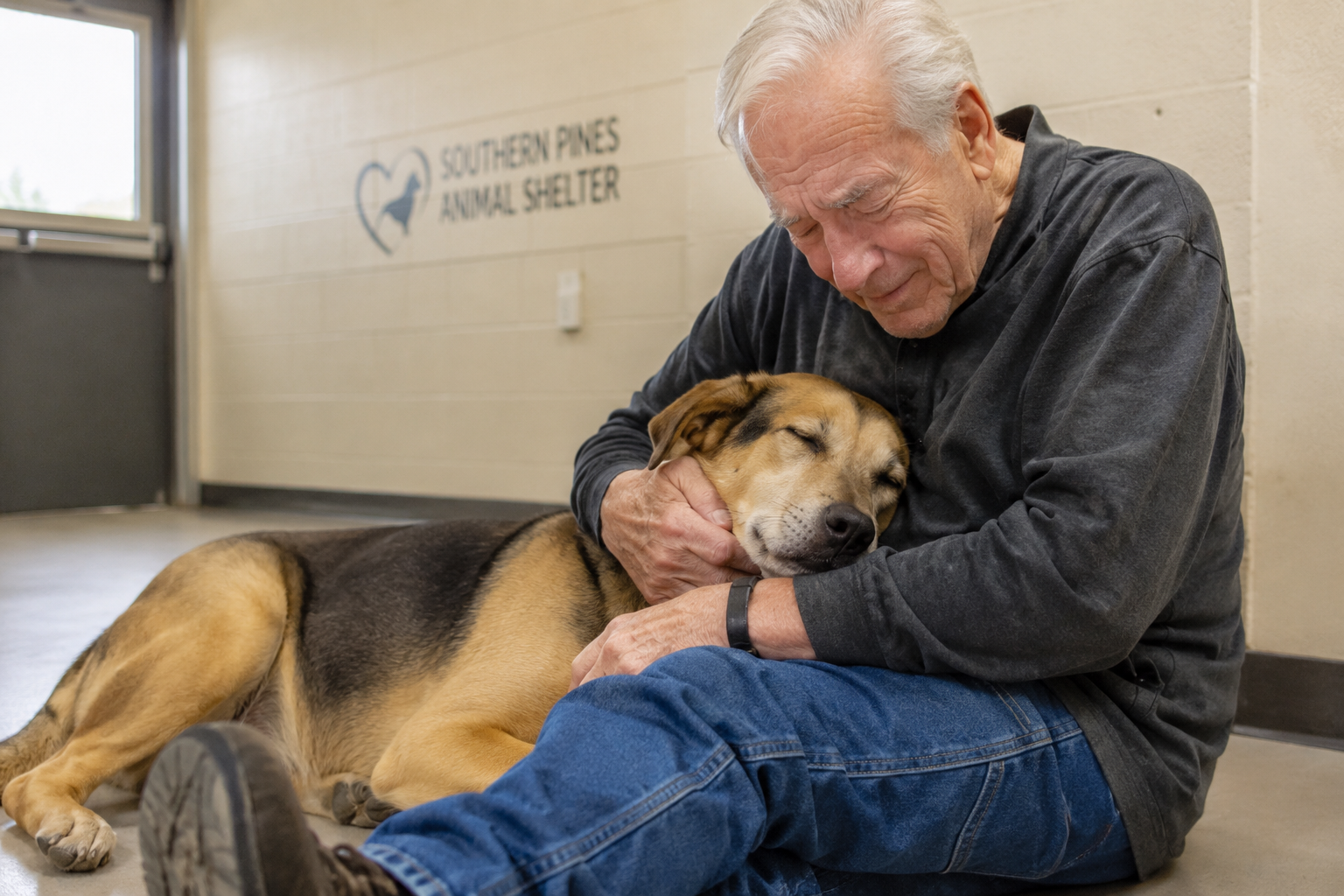
In the last kennel, a brown and white dog of indeterminate breed sat very still and looked at Harold with dark, calm eyes. It did not bark. It did not perform. It simply looked at him with the unhurried patience of an animal that has stopped expecting very much.
“What’s wrong with this one?” Harold asked.
The volunteer paused.
“His name is Walter,” she said. “He’s been returned four times. People say he’s too quiet. Too old. He doesn’t play the way puppies do.” She hesitated. “He’s scheduled for euthanasia tomorrow morning. We held the slot as long as we could.”
Harold looked at Walter. Walter looked at Harold.
Get Heartwarming Stories in Your Inbox
Join thousands of readers getting uplifting stories every week.